It is one of the most paradoxical problems of the modern inpatient healthcare system: people undergo clinical treatment in order to recover - and it is not uncommon for their nutritional status to deteriorate during their stay. Data from the German Society for Nutritional Medicine (DGEM) illustrates the enormous relevance of the issue: up to 30 percent of all patients in German hospitals are affected by malnutrition or are at acute risk of malnutrition - with dramatic consequences, including around 55,000 (!) avoidable deaths per year.
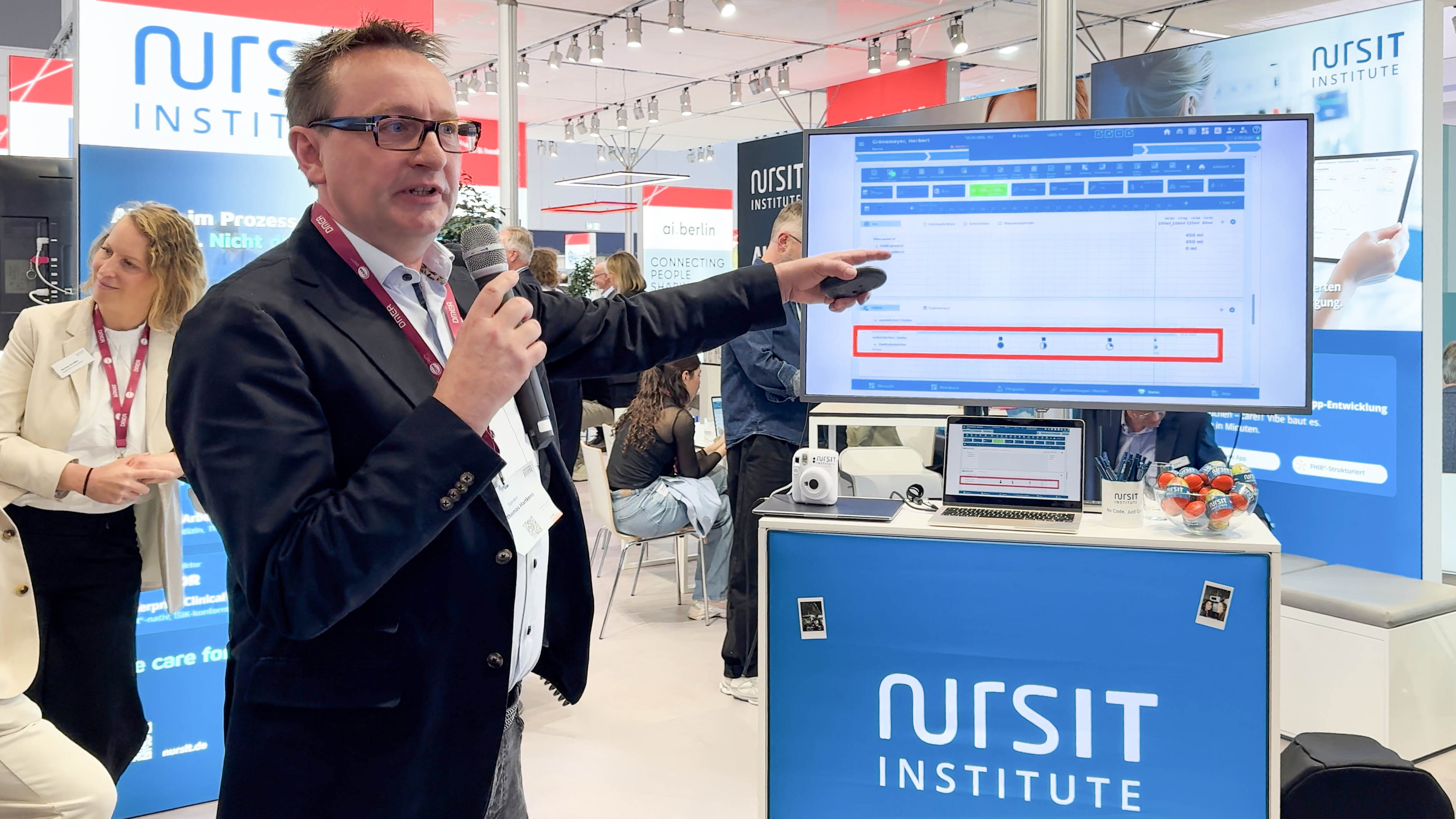
Politicians have responded to this critical care gap: With the Hospital Reform Adjustment Act (KHAG) passed in March 2026, the German Bundestag enshrined mandatory, systematic nutritional screening for inpatients in law for the first time. For hospitals, this means a compulsion to act in the midst of an already serious shortage of specialists. In his presentation at DMEA 2026, Dr. Thomas Hartkens, Managing Director of NursIT Institute GmbH, showed how this additional bureaucratic and nursing workload can be solved digitally and without placing an additional burden on staff.
The overlooked risk in everyday clinical practice
In his presentation, Dr. Thomas Hartkens presented the scientific evidence that underpins the acute need for action. Clinical malnutrition often develops or worsens during the course of an inpatient stay. Dr. Hartkens referred to relevant specialist publications, according to which the nutritional situation in hospital deteriorates further in up to 65% of patients during their stay.
The consequences for the healing process are serious: they range from demonstrably delayed wound healing and an increased complication rate to a significantly longer inpatient stay. However, because there is simply not enough time in the chronically overburdened daily nursing routine to manually document eating habits three times a day using estimation protocols, the continuous drop in calorie and protein intake often goes unnoticed for days in the hectic ward environment.
careIT Meal: image analysis instead of estimation logs
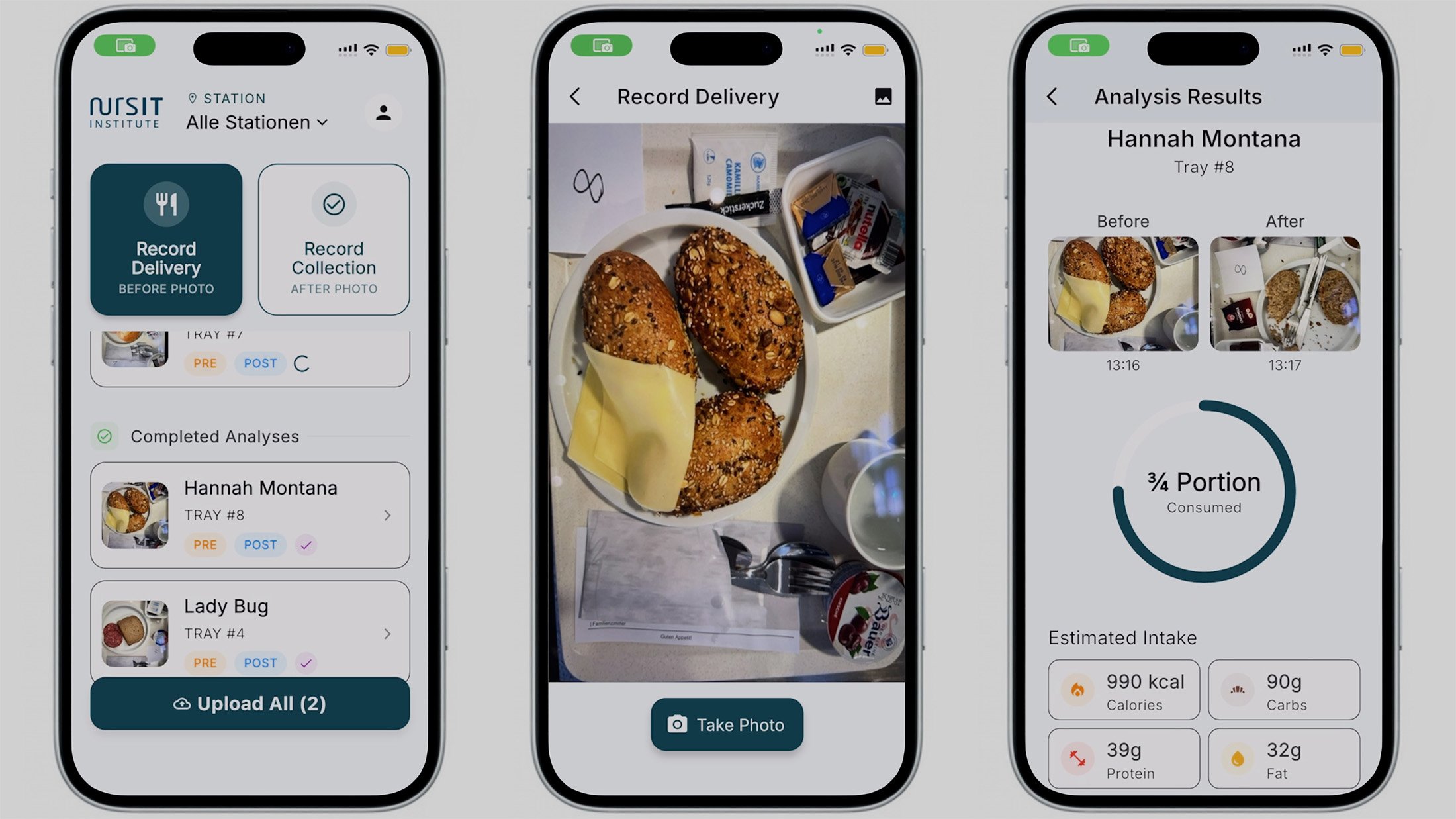
To close this critical gap in care, we at NursIT have developed the careIT Meal application. At the DMEA, Dr. Hartkens demonstrated the practical workflow, which replaces error-prone manual documentation with a sensor- and photo-based process using mobile devices. Instead of laboriously estimating whether a patient has eaten a quarter or half of a meal, a simple before-and-after photo of the tray is sufficient.
The process fits seamlessly into the existing routines for serving and taking back meals:
- The serving (pre-meal): When distributing the meals, the nurse takes a quick photo of the complete tray. The initial state of the meal is recorded via a unique identifier (tray ID).
- Take-back (post-meal): After the meal, a second photo is taken when the tray is collected. The nurse assigns the tray to the respective patient from the digital ward list.
- AI analysis: comparison of the before and after image. The software automatically recognizes which components (e.g. wholemeal rolls, side dishes, dairy products) have been consumed and to what extent.
The integrated AI translates the visual result directly into a precise nutritional value calculation. The exact values for calories, carbohydrates, proteins and fats are output as well as an automated textual summary of eating behavior for the care report.
Seamless system integration: long-term monitoring in careIT
A central aspect of our approach is the deep system integration. The data collected via careIT Meal does not remain isolated in a separate app, but flows directly into our primary clinical documentation software careIT without media discontinuity.
Within careIT, the daily recorded nutritional data is automatically aggregated and displayed in a continuous progress overview in the dashboard. Nutritional screening thus becomes an automated by-product of the workflow that takes place anyway.
If a patient's energy or protein intake falls below a critical, individually defined threshold value over several days, the main careIT software automatically sounds an alarm. This allows medical and nursing staff to intervene proactively - for example by adjusting the diet or calling in a nutrition team - even before a manifest malnutrition jeopardizes the clinical outcome.
We are now consistently transferring the proven concept of our speech-based documentation solution careIT Voice (Speech2FHIR) to nutritional intake: with Photo2FHIR, we are establishing a new standard for digital nutritional recording. Instead of isolating the results of image analysis in proprietary data silos, we transfer them directly into standardized FHIR resources (Fast Healthcare Interoperability Resources). This guarantees true interoperability: the clinically relevant nutritional data is available across systems, can be accessed at any time and forms the sound basis for clinical analyses and AI-supported decision support.
Relief through process integration
NursIT's strategic approach is consistently integrated into the current healthcare policy framework. The further developed digitalization strategy of the Federal Ministry of Health (BMG) places a clear focus on reducing bureaucracy in everyday clinical practice: by 2028, the use of AI-supported documentation processes is to be established as standard in 70 percent of all German hospitals in order to sustainably reduce the administrative workload in nursing.
As Dr. Thomas Hartkens emphasizes, artificial intelligence only unfolds its full added value when it is directly integrated into the clinical workflow. By automating data capture in the background, the technology frees nursing staff from redundant documentation work and frees up valuable resources for direct patient care.
 nursIT Editorial Team : May 21, 2024 5:12:17 PM